


Oxaloacetic Acid (OAA): A Central Hub in Cellular Metabolism
- Sep 20, 2025
- 1 min read
Oxaloacetic acid (OAA) is a four-carbon dicarboxylic acid (C₄H₄O₅) that plays a pivotal role in multiple metabolic pathways. Although inherently unstable in solution and usually studied in its salt form (oxaloacetate), OAA remains one of the most critical intermediates in biochemistry.

🔬 Role in Metabolism
Tricarboxylic Acid (TCA) Cycle
OAA condenses with acetyl-CoA to form citrate, initiating the TCA cycle.
It is regenerated at the end of the cycle, ensuring the cycle’s continuity.
This makes OAA indispensable for cellular energy production.
Gluconeogenesis
Pyruvate is carboxylated to OAA by pyruvate carboxylase.
OAA is then converted to phosphoenolpyruvate (PEP) by PEPCK, entering the gluconeogenic pathway.
This pathway is essential for maintaining blood glucose during fasting.
Amino Acid Metabolism
OAA serves as a precursor of aspartate through transamination.
Aspartate contributes to the biosynthesis of nucleotides (purines and pyrimidines) and several other amino acids.
🧪 Research Frontiers
Metabolic Regulation
OAA is widely studied in metabolic flux analyses, as it links carbohydrate, amino acid, and energy metabolism.
Neuroscience
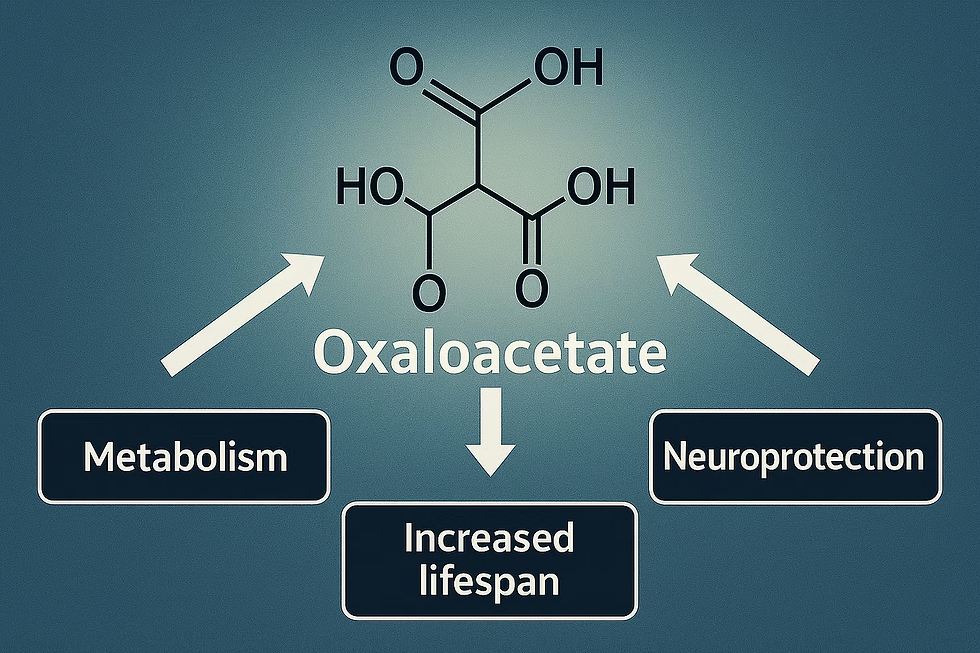
Preliminary studies suggest potential neuroprotective properties, possibly through regulation of glutamate metabolism and mitochondrial function.
Aging and Stress Response
Experimental evidence indicates that OAA may reduce lactate accumulation and improve mitochondrial efficiency, though clinical evidence is still limited.

🌍 Scientific Significance
OAA exemplifies a metabolic “crossroads molecule.” Its central role across multiple biochemical networks makes it a subject of continuing interest in biochemistry, neuroscience, and aging research. By deepening our understanding of OAA, scientists may uncover new insights into energy regulation, disease mechanisms, and potential therapeutic pathways.


