


Alliin: Biochemistry, Pharmacological Properties, and Therapeutic Potential of a High-Purity Garlic-Derived Compound
- Sep 23, 2025
- 4 min read

Introduction
Garlic (Allium sativum) has been recognized for centuries as both a culinary spice and a medicinal herb. Its therapeutic potential is primarily attributed to sulfur-containing compounds. Among these, Alliin (S-allyl-L-cysteine sulfoxide) is one of the most stable and well-characterized bioactive precursors. Alliin itself is odorless and physiologically inert, but upon enzymatic conversion by alliinase, it generates allicin, which is responsible for the characteristic aroma of garlic and much of its biological activity. The availability of high-purity Alliin (≥98%) as a standardized extract has facilitated scientific investigation and enabled consistent use in nutraceutical and pharmaceutical formulations.
This article provides a comprehensive overview of Alliin’s chemistry, biosynthesis, metabolism, pharmacological properties, experimental and clinical findings, and potential applications in human health.
Chemical Characteristics of Alliin
IUPAC Name: (2R)-2-amino-3-[(prop-2-en-1-yl)sulfinyl]propanoic acid
Molecular Formula: C6H11NO3S
Molecular Weight: 177.22 g/mol
CAS Number: 556-27-4
Alliin is a derivative of the amino acid cysteine, containing a sulfoxide functional group that confers stability. Its crystalline form is water-soluble, making it suitable for extraction and formulation. Unlike allicin, which is chemically unstable and rapidly decomposes, Alliin can be reliably isolated and quantified by high-performance liquid chromatography (HPLC). High-purity Alliin (≥98%) ensures reproducible biological activity and reliable incorporation into research and industrial applications.
Biosynthesis and Conversion to Allicin
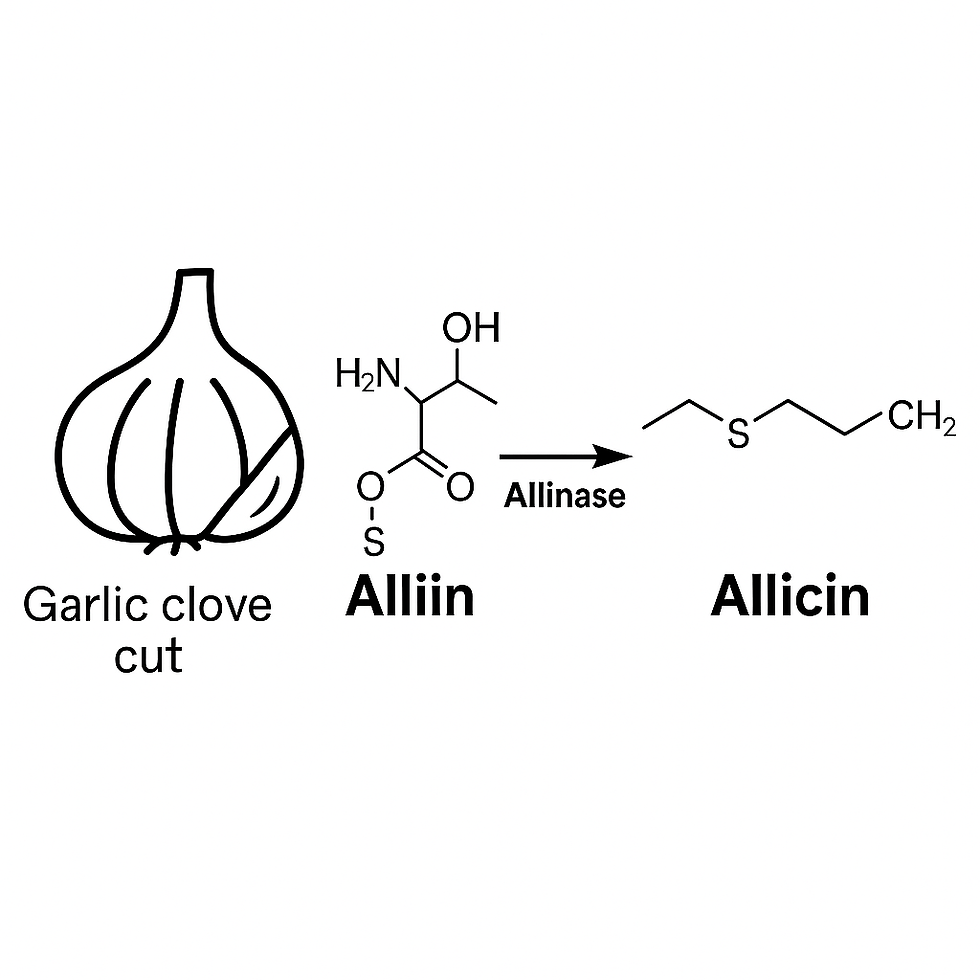
In intact garlic cloves, Alliin is stored within the cytoplasm, whereas alliinase, the enzyme responsible for its hydrolysis, is compartmentalized in vacuoles. When garlic tissue is crushed or chopped, cell disruption allows alliinase to act on Alliin, producing allicin through a non-oxidative elimination reaction.
Reaction:
Alliin + alliinase → Allicin + pyruvate + ammonia
This conversion explains the rapid release of garlic’s pungent aroma upon mechanical processing. While allicin is unstable and decomposes into various sulfide derivatives, the stable Alliin content of garlic allows for reliable measurement of its therapeutic potential.
Metabolism and Bioavailability
The metabolism of Alliin in humans is complex. After oral ingestion, Alliin may:
Remain unconverted if alliinase is deactivated (e.g., by cooking or gastric acid).
Undergo enzymatic hydrolysis in the gut microbiota to yield allicin or other organosulfur compounds.
Be absorbed and circulate in plasma in its original form, albeit at low levels.
Pharmacokinetic studies suggest that Alliin contributes indirectly to garlic’s systemic effects, primarily via conversion products such as allicin, ajoene, and various sulfides, which possess antioxidant and cardioprotective properties.
Pharmacological Properties
Antioxidant Activity
Alliin exhibits free radical scavenging ability and enhances endogenous antioxidant defense systems. In vitro studies have shown that Alliin reduces oxidative stress by lowering lipid peroxidation and increasing glutathione activity.
Cardiovascular Protection
Alliin and its metabolites help regulate blood pressure, reduce serum cholesterol, and prevent platelet aggregation. Clinical evidence suggests garlic extracts rich in Alliin can lower LDL cholesterol and modestly increase HDL cholesterol.
Immune System Modulation
Alliin enhances immune defense by stimulating macrophage activity and modulating cytokine production. These effects may contribute to improved resistance against microbial infections.
Antimicrobial Effects
While Alliin itself shows limited direct antimicrobial activity, its conversion to allicin yields potent antibacterial, antifungal, and antiparasitic properties. These compounds have been tested against pathogens including Escherichia coli, Staphylococcus aureus, and Candida albicans.
Anti-Inflammatory Properties
In experimental models, Alliin suppresses the expression of pro-inflammatory mediators such as TNF-α and interleukin-6. This suggests potential in reducing chronic low-grade inflammation associated with metabolic syndrome.
Neuroprotection
Preliminary studies indicate that Alliin may exert protective effects in neuronal cells by reducing oxidative damage and apoptosis. These findings highlight potential roles in preventing neurodegenerative disorders such as Alzheimer’s disease.
Preclinical Studies
Animal Models
Rodent studies demonstrate that Alliin supplementation can reduce hyperlipidemia, improve antioxidant status, and mitigate atherosclerotic plaque formation. In diabetic rats, Alliin administration improved insulin sensitivity and reduced oxidative damage.
In Vitro Studies
Cell culture experiments reveal that Alliin protects endothelial cells from oxidative stress and inhibits platelet aggregation pathways. Moreover, it shows anti-proliferative effects against certain cancer cell lines, although the mechanisms require further elucidation.
Clinical Evidence
Although most garlic-related clinical studies focus on garlic extracts rather than purified Alliin, evidence supports the health benefits of Alliin-rich preparations:
Cardiovascular Health
Meta-analyses suggest that garlic supplementation lowers total cholesterol by 10–15% and may reduce systolic blood pressure by 5–10 mmHg. Alliin content is often used as a marker of extract potency.
Immune Support
Clinical trials report that garlic extract supplementation reduces the frequency of common colds and shortens recovery time, suggesting immunomodulatory benefits linked to Alliin-derived metabolites.
Diabetes and Metabolic Syndrome
Preliminary trials indicate that garlic preparations improve fasting glucose, HbA1c, and lipid profiles in patients with type 2 diabetes, though standardized high-purity Alliin supplements remain underexplored.
Industrial and Nutraceutical Applications
Dietary Supplements
Alliin is used as a standardized marker compound in garlic capsules, tablets, and powders. High-purity Alliin (≥98%) guarantees consistent potency and quality.
Functional Foods
Incorporation of Alliin into fortified beverages, nutrition bars, and health foods provides antioxidant and cardiovascular benefits without the odor associated with allicin.
Pharmaceutical Research
Alliin serves as a research tool for studying sulfur metabolism, oxidative stress, and cardiovascular pharmacology. Its stability makes it preferable over allicin in experimental models.
Safety and Toxicology
Alliin is generally recognized as safe (GRAS). Toxicological studies indicate that even high oral doses are well tolerated in animals and humans, with no evidence of mutagenicity or carcinogenicity. Gastrointestinal discomfort remains the most commonly reported side effect, primarily when consumed as whole garlic rather than purified Alliin.
Future Directions
Standardized Clinical Trials
More studies using purified Alliin are needed to establish dose-response relationships and confirm therapeutic efficacy in cardiovascular, metabolic, and neurodegenerative diseases.
Combination Therapies
Exploring synergistic effects of Alliin with other nutraceuticals such as polyphenols, omega-3 fatty acids, or probiotics could expand its health applications.
Molecular Mechanisms
Detailed research into gene expression and signaling pathways modulated by Alliin may uncover novel therapeutic targets.
Innovative Delivery Systems
Development of encapsulation technologies or nano-formulations could improve Alliin’s stability and bioavailability, ensuring consistent clinical outcomes.
Conclusion
Alliin is a stable, high-purity sulfur-containing compound from garlic with significant pharmacological potential. Acting as the precursor of allicin, it contributes to antioxidant defense, cardiovascular protection, immune modulation, and possible neuroprotection. Although much of the clinical evidence has focused on garlic extracts, standardized high-purity Alliin preparations provide opportunities for rigorous research and targeted therapeutic applications. With ongoing scientific investigation and improved delivery technologies, Alliin may emerge as a cornerstone nutraceutical ingredient for managing chronic diseases and promoting overall health.


